In the world of modern events, the sound and light system experience is one of the essential elements that contribute to the success of the event and attract attention. Therefore, Deep Vision Company offers an integrated sound system service that ensures all participants in the event enjoy a unique and clear audio experience.
Whether the event is a conference, a music concert, or an exhibition, the sound system we provide is carefully designed to meet the specific needs of the event. In this article, we will cover the key aspects of this service, from the features offered by Deep Vision Company to how the system is customized to suit various types of events.
What is the sound system offered by Deep Vision Company at events?
The sound and lighting system provided by Deep Vision Company at events is a comprehensive solution that relies on the latest technologies to ensure a high-quality audio experience.
The system includes a range of advanced equipment such as microphones, speakers, and sound control devices, all customized to suit the size and nature of the event.
Whether the event is small or large, the Deep Vision team strives to provide clear and evenly distributed sound throughout the venue, while ensuring continuous technical support during the event to guarantee smooth operations.
Types of sound systems offered by Deep Vision Company
Here are some types of sound systems offered by our company:
- Sound for Events and Conferences
- Integrated Sound: These include powerful and clear speakers to effectively transmit sound to all attendees, with sound evenly distributed throughout the venue.
- Wireless Microphone Systems: To facilitate the use of microphones during presentations, allowing participants and presenters to move freely without the constraints of wires.
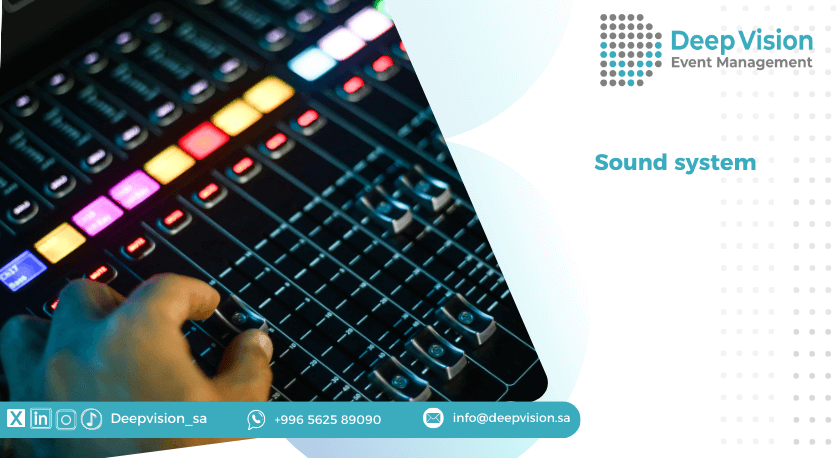
- Digital Sound Control Systems: Allow supervisors to control sound levels and balance frequencies precisely.
- Sound Systems for Crowd Management
- PA (Public Address) Systems: Used to direct sound to manage large crowds in both open and closed spaces, enabling public announcements or emergency instructions.
- Portable Speakers: Used in outdoor venues or events where quick movement is needed and where directions or announcements need to be made on the spot.
- Sound Systems for Festivals and Large Gatherings
- Outdoor Sound with Massive Speakers: Used for large festivals in open spaces, such as music concerts or sports events.
- Surround Sound: To provide a rich and diverse audio experience, with sound distributed evenly and realistically throughout the venue.
- Outdoor Sound Reinforcement Systems: Amplify sound over long distances without losing quality, ensuring clarity even in large crowds.
- Sound Systems for Gaming and Entertainment Activities
- High-Performance Sound (Hi-Fi): Provide precise, high-quality sound for entertainment experiences such as video games or live shows.
- Sound for Teams or Competitive Games: such as the systems used in sports tournaments or activities that require interactive audio with the audience.
- Sound Systems for Special Celebrations
- Small to Medium Sound: Used in private parties like weddings or birthday parties, where good sound quality is required, but without the need for a massive sound.
- Stage Lighting & Sound Systems: In certain special celebrations, sound is integrated with lighting to achieve a complete visual and audio effect.
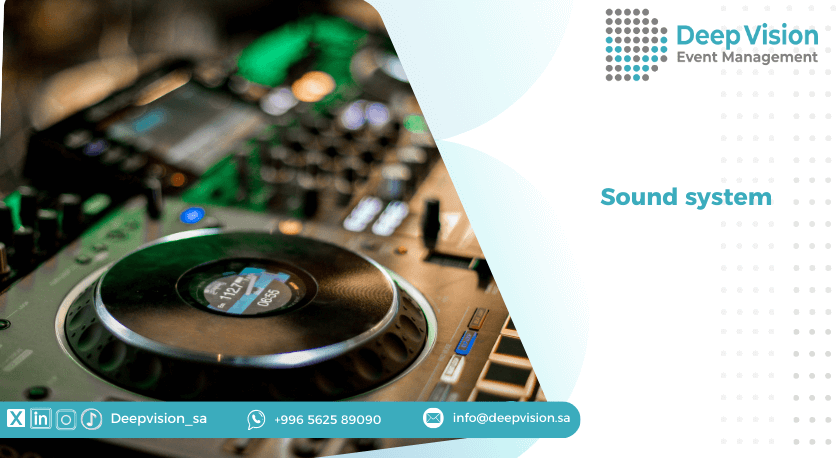
Features of the sound system for events and conferences
Features of the best sound system for events and conferences:
- High Sound Clarity: Ensures that the sound is clear and audible to all attendees, regardless of the distance between the speaker and the audience.
- Balanced Sound Distribution: Distributes sound evenly throughout the hall or venue, ensuring that it reaches every corner with the same efficiency.
- Wireless Microphone Systems: Contributes to the comfort of speakers and guests, allowing them to move freely without worrying about wires.
- Flexible Sound Control: Allows for easy adjustments of sound according to the event’s needs (such as frequency adjustments or volume control).
- Noise and Interference Cancellation: Modern systems are equipped with noise reduction technologies to ensure sound purity in noisy environments.
- Easy Connectivity: The system can be connected to multiple sources, such as computers, projectors, or smartphones, enabling seamless integration of audio with visual content.
- Sound Enhancement Technologies: Includes technologies that improve sound over long distances or in spaces with reflective surfaces that may affect sound quality.
- Support for Simultaneous Translation: Advanced audio systems can support real-time translation services, facilitating communication in international conferences.
- Storage and Digitization: Allows for audio recording and storage in digital files for future use or archiving purposes.
- Remote Control Capability: Some systems offer remote control via smart applications or devices, making it easier to manage sound during the event.
- Control Over Sound Levels for Different Parts of the Event: Allows adjusting sound levels according to the type of activity (e.g., presentations, lectures, or discussions) to ensure an optimal experience for all attendees.
- Multi-Channel Support: The ability to connect multiple audio sources simultaneously, allowing for diverse presentations, such as presentations with music or video.
- Ease of Mobility and Setup: Portable sound systems offer ease of transport and quick setup, which is important for mobile events or venues with limited space.
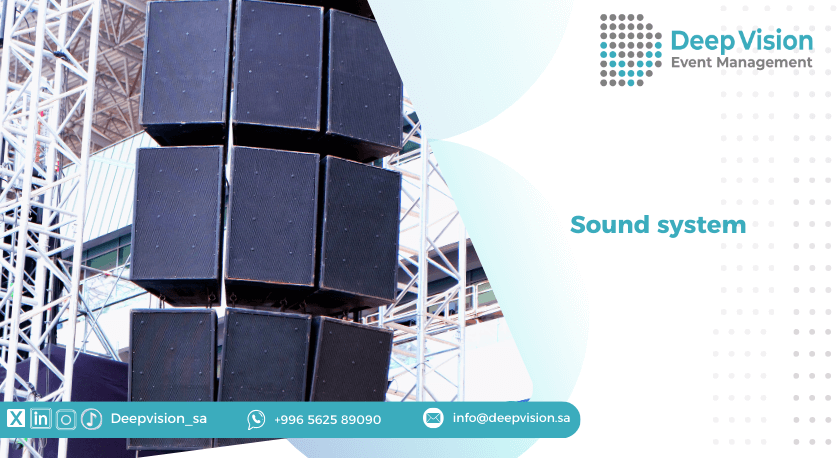
Technical equipment used in the sound system
The sound system relies on a variety of technical equipment that works together to provide a high-quality audio experience. Some of the key equipment includes:
- Speakers: Used to convert electrical signals into audible sound. Their types vary depending on the application (e.g., home speakers, party speakers, etc.).
- Amplifiers: Amplify weak audio signals to make them stronger and clearer when heard through speakers.
- Microphones: Capture sound and convert it into electrical signals, used in recordings, broadcasts, and live performances.
- Mixers: Combine and control multiple audio signals, allowing for sound adjustments and balancing of audio levels between different sources.
- Equalizer: Allows for adjusting different sound frequencies (bass, treble, etc.) to achieve the desired audio output.
- Audio Interfaces: Provide the connection between audio equipment (such as microphones or musical instruments) and a computer or audio device.
- Effects Processors: Used to add audio effects such as echo, various frequencies, and distortion to enhance or alter the sound.
- Cables: Used to connect all the equipment together, such as audio cables (XLR, TRS, etc.).
- Subwoofers: Used to produce deep sounds and low frequencies, enhancing the overall audio experience, especially in music and films.
- Remote Control Systems: Used to control audio equipment remotely, especially in theaters or large event management.
An example of the sound system service at one of Deep Vision’s events
Here is the organized topic in bullet points:
Project:
- Project Location: King Salman Reserve
- Area: 300 square meters
- Objective: To provide an interactive experience that reflects the beauty of the reserve and its unique environmental heritage.
Design and Interaction with the Environment:
- The project was designed to enable visitors to interact with the surrounding environment in an innovative way.
- The goal of the design is to increase visitor interaction and environmental awareness.
Sound System Service:
- Installation of high-quality sound systems covering the entire area.
- Providing ambient sound that complements interactive exhibits, such as bird sounds or wind, to enhance the visitor experience.
- Adding sound effects that match the exhibits, such as those related to animals or plants.
Lighting Service:
- Using professional lighting to highlight the exhibits and emphasize their details.
- Adjustable lighting that changes the atmosphere based on the theme or season.
- Using dynamic lighting to create a sense of excitement and thrill in certain exhibits.
Objective of Sound and Lighting:
- Enhance the visitor experience and increase the impact of the interactive experience.
- Highlight the ecological diversity of the area and raise environmental awareness.
Result:
- Creating an immersive experience that enhances the visitors’ sense of being surrounded by nature.
- Increasing interaction with nature contributes to improved environmental understanding.
Can the speakers or organizers easily control the sound level?
Yes, speakers or event organizer can easily control the sound level of the sound system using audio mixers and amplifiers. The mixers provide tools to adjust the sound levels between different sources, such as microphones and music, allowing for sound balancing and fine-tuning as needed.
Additionally, some modern systems come with digital control interfaces or remote control systems, making it easier for organizers to adjust the sound quickly and accurately during events or performances.