

A successful booth at a food exhibition such as Saudi Food Show sells the taste before the conversation even begins. Visitors in this sector make decisions with their senses: they crave what they see and trust what they taste. That is why successful booth design relies on warm materials that communicate authenticity, appetizing lighting, a live tasting area where visitors can experience the product for themselves, and a display that makes the product the hero. In the food industry, looking good is not enough — the booth should look irresistible.
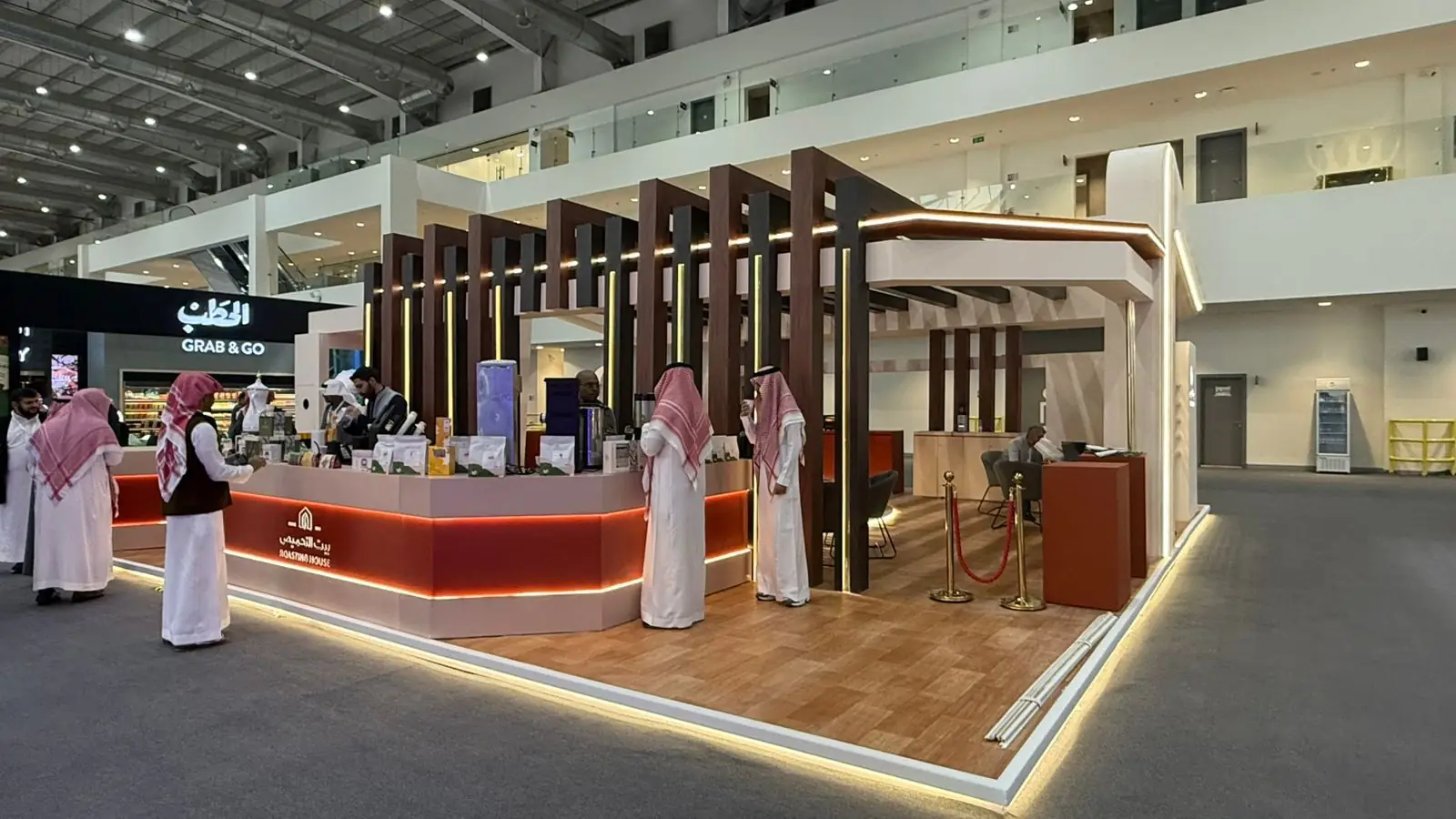
Real executed project: The “Bait Al Tahmees” booth is one of Deep Vision’s completed projects.
At a specialized food exhibition, your audience does not buy with their eyes alone — they experience your brand with all their senses. A scent draws them in, a color stimulates their appetite, and a taste can ultimately make the decision. Cold corporate formality does not work here. What works is warmth, hospitality, and sensory appeal. A booth that fails to awaken the appetite becomes little more than a display shelf that visitors simply walk past.
At Deep Vision, we understand this sector through real execution. One example is the “Bait Al Tahmees” booth, which we delivered with a warm visual character, wooden materials, lighting designed to highlight the product, and a hospitality area where coffee was served directly to visitors.
What Makes a Food Booth Different?
Food exhibitions give visitors something many other industries cannot: the opportunity to experience the product immediately. At a technology exhibition, an exhibitor explains an idea. Here, the exhibitor can offer a sample that speaks for itself. That is why the design should begin with the senses: How does the product look? What does it smell like? How is it presented in a way that makes visitors want to try it? Appetite is the language of persuasion in this sector.
Five Principles for a Food Booth That Appeals to the Senses
01 Warm Materials That Communicate Authenticity
Wood, earthy colors, and natural textures create a feeling of warmth and quality that naturally complements food products. Cold, industrial materials can create distance, while warm finishes invite visitors to come closer — almost as if they are entering a space designed for genuine hospitality.
02 Lighting That Stimulates the Appetite
Warm, focused lighting highlights the product and makes it look more appetizing, much like the lighting used in premium restaurants. Cold lighting can drain food of its visual appeal, while carefully planned warm lighting turns the product into the focal point and naturally draws attention toward it.
03 A Live Tasting Experience
This is often where the decision is made in the food sector. Turn tasting into a direct experience: coffee prepared in front of the visitor, a sample presented elegantly, or even a live cooking experience. A taste experienced firsthand is more persuasive than any description and can transform a visitor from a spectator into a genuinely interested prospect.
In the food industry, the product can sell itself. A single tasting moment can replace lengthy explanations and transform an impression into a real experience.

04 A Display That Makes the Product the Hero
The food product is the star, so give it the most prominent position. An elegant, organized display — rather than a crowded one — gives every product room to breathe and be seen clearly. Attractive packaging and thoughtful arrangement can increase the perceived value of the product before the visitor even tastes it.
05 Hospitality That Builds a Relationship
In the food industry, hospitality is part of the product experience. A warm welcome, a smile, and a generously presented sample can create an emotional connection that lasts beyond the exhibition. Visitors do not only remember the product; they remember how they were treated while experiencing it.
Common Mistakes to Avoid
Cold industrial materials that distance visitors; harsh or cool lighting that makes food less appetizing; the absence of a live tasting experience; and overcrowded displays that hide the product instead of highlighting it.
For a complete overview of the process, explore our comprehensive guide to exhibition booth design and execution .
Why Choose Deep Vision for Your Saudi Food Show Booth?
Because we have real execution experience in the food sector. The “Bait Al Tahmees” booth is an example of our ability to create an integrated sensory experience through warm materials, appetizing lighting, and a live hospitality area where coffee is served directly to visitors.
Since 2018, we have delivered more than 178 projects across major exhibitions and conferences in Saudi Arabia, including Riyadh, Jeddah, and Dammam. We manage design, production, installation, and technical support under one integrated delivery model.
Our philosophy is captured in our signature: Experiences, beyond — experiences that go beyond expectations.
Preparing a Food Booth That Appeals to the Senses?
We transform your brand and products into an integrated sensory experience combining design, hospitality, product presentation, and live tasting — from the initial concept through execution.
Talk to Us About Your Booth →FAQs
What Makes Food Booth Design Different?
Food booth design engages all the senses through warm materials, appetizing lighting, and a live tasting area where visitors can experience the product firsthand. Taste is one of the most powerful forms of persuasion in this sector.
Has Deep Vision Executed Food Exhibition Booths?
Yes. One of Deep Vision’s documented projects is the “Bait Al Tahmees” booth, featuring a warm visual identity, wooden materials, and a hospitality area where coffee was served directly to visitors.
Why Is a Tasting Area Important in a Food Booth?
Because experiencing the product directly is more persuasive than simply describing it. A live tasting experience can turn a visitor from a passive observer into someone genuinely interested in the product.
What Type of Lighting Works Best for Food Booths?
Warm, focused lighting is generally the most effective because it highlights the product and makes it appear more appetizing, unlike cold lighting that can reduce the visual appeal of food.


